01
Sedimentary, not volcanic
Its host rocks are part of a sedimentary sequence rather than a lava flow — one of the features that makes Kentucky agate geologically unusual.
Bold color. Precise banding. A geologic story unlike almost anything else in the agate world — shaped in sedimentary rock and carried into Kentucky creeks by deep time.
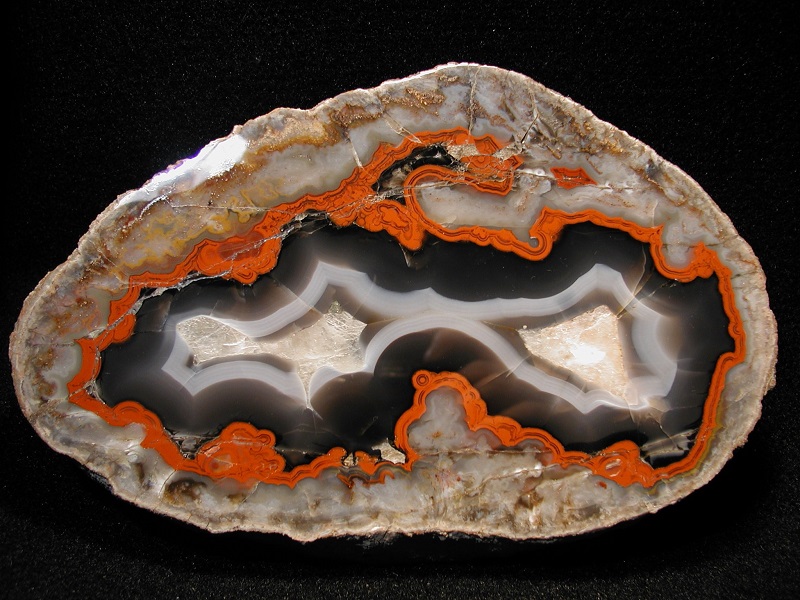
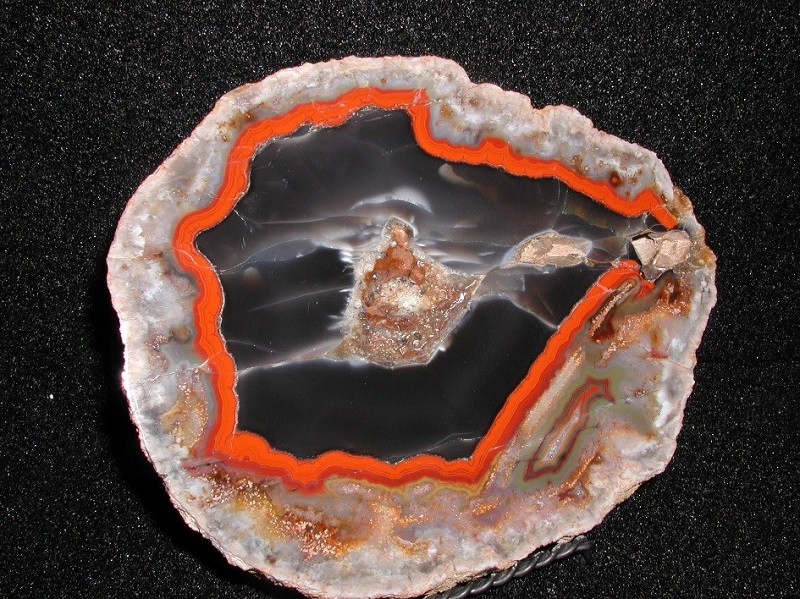
Kentucky agate is a banded form of chalcedony, a microcrystalline variety of quartz. Most familiar agates formed in cavities within volcanic rocks. Kentucky agate is a notable exception: it formed in sedimentary rocks in east-central Kentucky, giving local collectors a gemstone with an unusually distinctive geologic history.
Its host rocks are part of a sedimentary sequence rather than a lava flow — one of the features that makes Kentucky agate geologically unusual.
Its story begins in the Mississippian Period, when river-delta and shallow-sea sediments accumulated across the region.
State law designated Kentucky agate the Commonwealth’s official gemstone effective July 15, 2024.
Geologists place Kentucky agate in a setting involving the Borden Formation’s shales and siltstones and the overlying Slade Formation’s limestone and dolomite. Burial, fracturing and circulating silica-rich fluids created the conditions for agate nodules to grow.
Mississippian river-delta deposits became shale and siltstone; later shallow-sea deposits became limestone and dolomite.
Burial, organic alteration, faults and fractures created spaces and pathways through the rock.
Silica-bearing solutions entered cavities and gradually crystallized into layers of chalcedony.
Weathering and stream erosion later freed nodules from their host rock, placing many of them in creek gravels and banks.
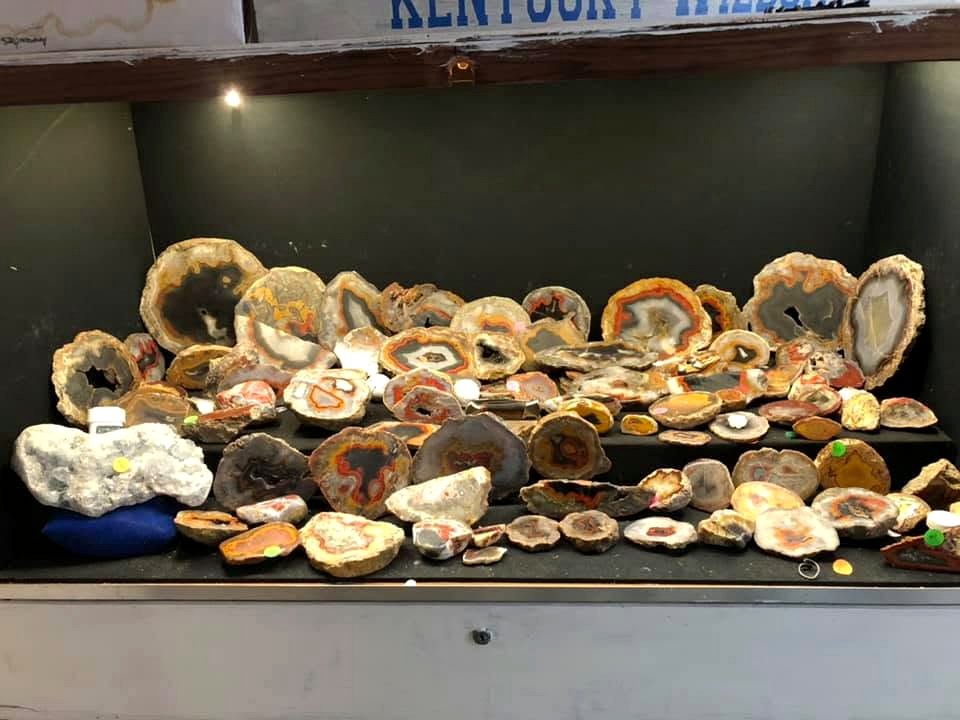
Among collectors, the name imperial — or red-and-black Kentucky agate — is used for the most dramatic material, where saturated red and orange bands meet deep black chalcedony. It is a collector name rather than a separate mineral species, but it describes one of the most sought-after looks in Kentucky agate.
Middle Fork in Estill County has a special reputation for red-and-black material. Published specimen records associate prized red-and-black Kentucky agates with the Middle Fork Creek area, making the drainage part of the lore and history of Kentucky agate collecting.
The featured specimens in the hero show why this material commands attention: intense fortification bands, dark interiors, pale crystalline windows and a kind of visual depth that can look different every time the stone turns in the light.
Not every Kentucky agate is imperial — and not every spectacular Estill County specimen has the classic red-and-black combination. That range is part of what keeps local collectors looking.
The vivid colors are not paint or surface staining. They come from tiny mineral particles and changing chemistry inside the silica as the agate formed.
Patterns can be as distinctive as the colors. Kentucky agate may show concentric bands, fortification patterns, tubes, circular “eyes,” botryoidal forms and crystal-lined centers. A plain-looking rough nodule can reveal an unexpectedly complex interior after cutting.
The story does not end when a nodule comes out of the creek. Cutting reveals the structure, polishing makes the banding readable, and lapidary work turns geology into something people can hold, wear and share.
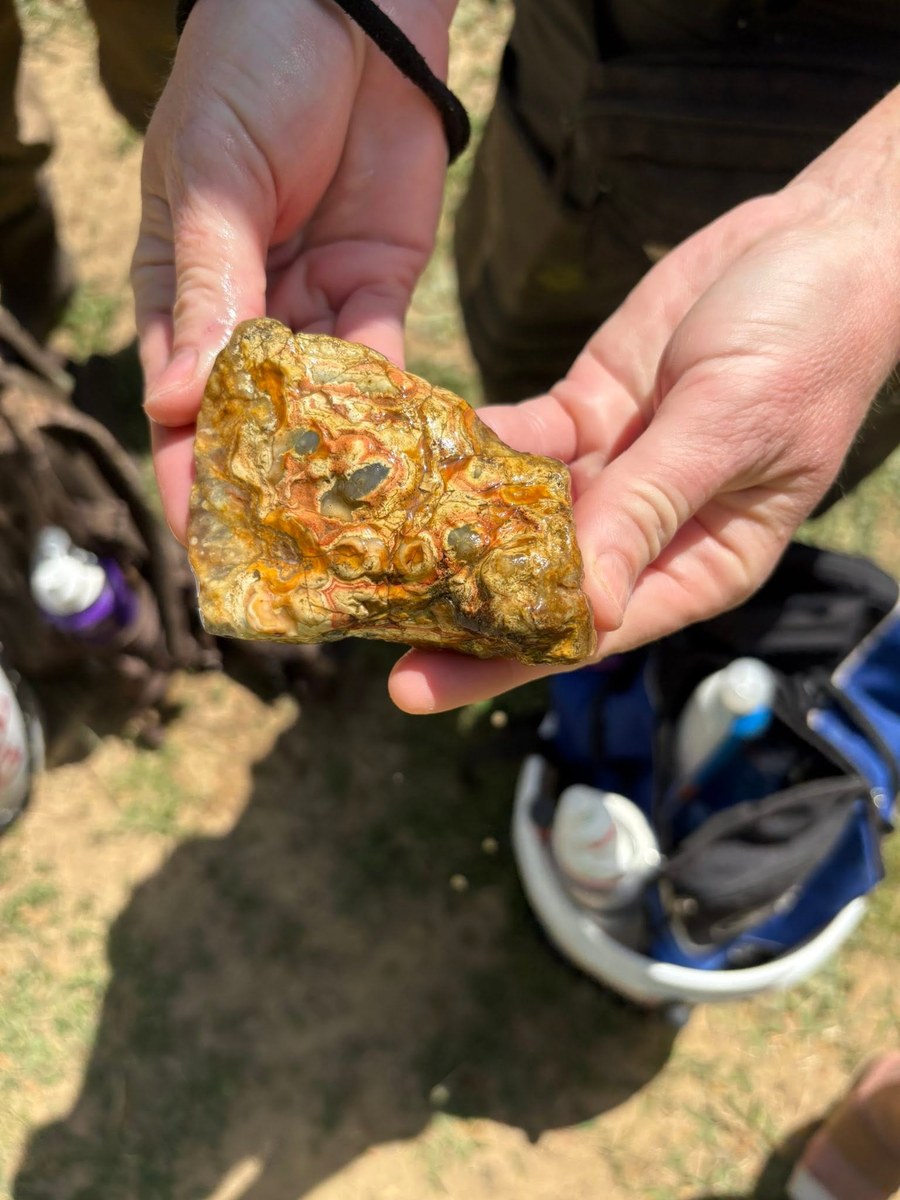
Legal collecting and permission come first. Many nodules are recovered from creek gravels and eroded banks.
Sawing the rough exposes banding, eyes, color zones, crystal pockets and other structures hidden inside.
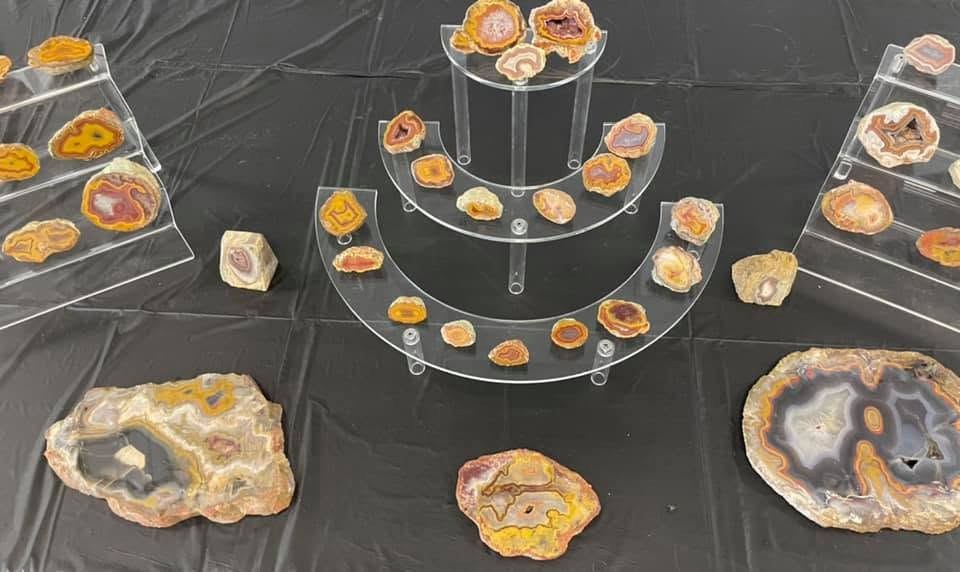
Slabs can become cabochons, polished display pieces and jewelry while preserving the natural pattern.
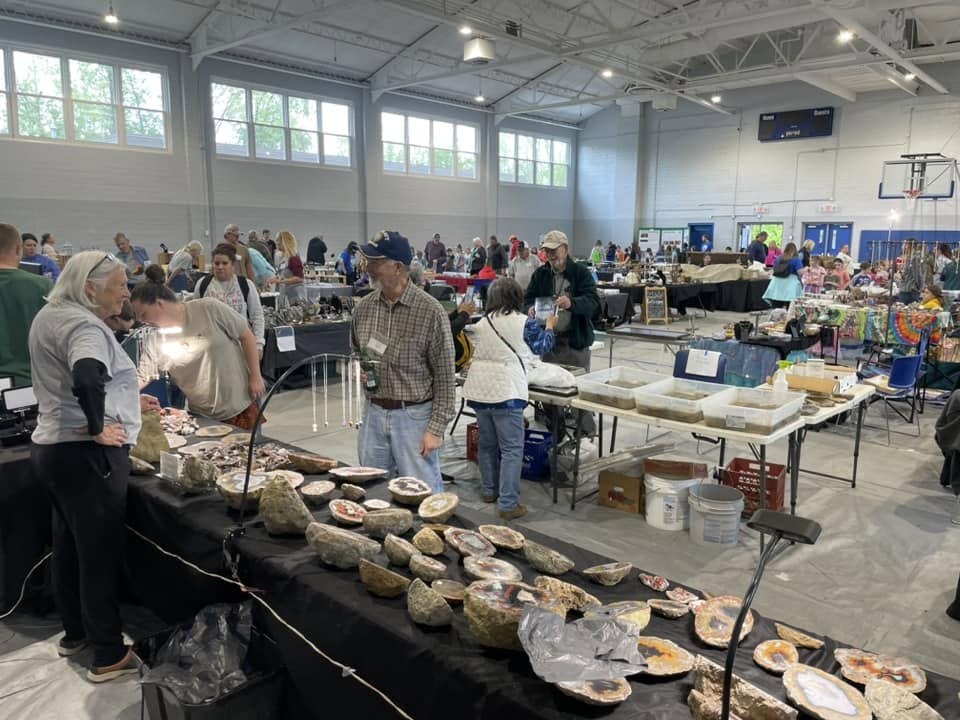
Meetings and shows pass along identification skills, cutting knowledge and decades of local experience.
Club member Liam Haggard has documented Kentucky agate in the field and in the shop for years. These videos are included here as educational examples of the knowledge being passed forward inside the club.
A field look at the search, observation and local experience that help turn a creek walk into a geology lesson.
Club member video · Liam Haggard / LiamOutLoud
Real collecting experience helps connect color, rind, host material, creek setting and the patterns that appear after a specimen is cut.
Club member video · Liam Haggard / LiamOutLoud
For generations, people in and around Estill County have learned the creeks, the rough material and the lapidary character of this unusual agate. That local knowledge is one of the reasons the club treats education, legal access and responsible collecting as part of the same tradition.
Kentucky agate links geology to field experience: recognizing host material, understanding where nodules weather out, learning what different rinds can hide, deciding how to orient a cut, and then reading the mineral story exposed on the saw.
Every geological specimen shown on KyRockClub.com is a real photograph from the club, its members or approved contributors. Photos may be enhanced for clarity, but the geology is never fabricated.